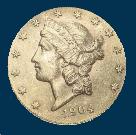
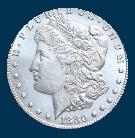
Offset the Decline of the U.S. Dollar
...with Investment-Grade US Gold and Silver Coins.....
To date, the US Dollar has lost
in excess of 35% of its value,
and experts say that this is only
the beginning. The government
is now openly predicting another
30-34% decline which will result
in our cost of living to increase
exponentially in yearsto come,
thereby causing other havoc.
The only true protection we have
available is if you put yourself on
the "gold standard" by owning a
percentage of gold to hedge other investments. As you will see from the examples
below, the purchasing power of currencies demonstrate how, over time, the only
thing that has maintained its true "purchasing power" is via gold investments.
Beware of the proposed "AMERO" ...
Canada, North America and Mexico are
proposing a new currency, i.e. the "Amero".
Here, they are proposing mixing our economy
with Mexico and they think it will work for our
best interest? PLEASE NOTE: If you have
questions on the "Amero", please give me a call
as I am constantly researching the progress and will update you to the day and
hour that you call on what is happening and how it will affect our economy.
The reason the Dollar is in this situation to begin with is because we were taken off
of the gold standard. Ever since, our Dollar has declined. The only way to fight and
protect yourself against the further decline of the Dollar, or even if we were to
eventually convert to the Amero, is to put yourself on the gold standard by diversifying
your assets into gold. If you are even remotely curious about this, from the
beginning you must know that not all gold is created equal. Speak with me about
how different types of gold has performed historically before making a move into
gold. All gold is a good idea, but not all gold will perform the way that you want it to.
***Click Here to View the "video on gold" to and see why gold is
the number one choice investment today***.
U.S. Dollar Against Other Currencies, For Example:
The Dow is currently at almost 13,000 reaching into record territory and probably
going up more. But, while all this euphoria is taking place, precious metals, such
as gold, is reaching up to new heights. It seems as if the U.S. Dollar - which is
flooding the world with our trade imbalance - is in for an even worse time. It kicked up
to $2.00 against the British pound just recently, the highest in 25 years.
In 1985, the U.S. Dollar was at $1.04 against the Pound, meaning one Pound was
equal to $1.04 of the U.S. Dollar. The value of the U.S. Dollar has dropped
substantially since then, leveling off, and then plummeting again to $2.00 which is
roughly half of what it was in 1985.
The Yen in 1971 was 360 Yen to the U.S. Dollar. Today, it has dropped down to the
point of where one dollar is getting a little over 117 Yen. The U.S. Dollar has gone
down about 2/3 against the Yen in that period of time.
Inflation and the U.S. Dollar:
As you look at the price of the U.S. Dollar itself, what you could buy in 1944 for $10
cost $143.69 in 2006. We have lost about 14-15 times and, in certain other areas,
as much as 16 times the value of the dollar between 1940 and 2006. Lastly, in 2006
it took $10 to buy what took $0.70 to buy in 1940.
The U.S. Dollar was stable for almost 100 years. What changed? As long as it was
linked to gold, it didn’t vary that much, but once the fed broke the link to gold, and
began printing money, the value of the U.S. Dollar started its now-continual spiral
downward. In fact, it is expected to decline another 30-40% before it’s over.
For a real life example, if you had $100,000 in savings years ago, that same account
might be worth $20,000 or $30,000 at best, or even $10,000 or maybe even $5,000
when it comes to the "actual" purchasing power - from what it had years ago to today
‘s decline. This is why so many analysts are saying that we should diversify our
portfolios in gold, which will be safer than many other ways to invest, or maintaining
your money in a bank or a savings account.
What is the best way to approach the gold market?
That is the question and the issue that we are here to clear up for you. Remember,
gold has increased 176% since the inception of this current bull market. Many
experts feel we should, conservatively, see another 335%. Please feel free to sign
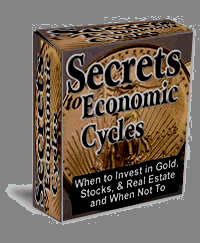
up for a copy of our free ebook, and learn, based on history, important investment
cycles that you need to be aware of. Lastly, feel free to get into contact with us, so we
can personally explain what is going on behind the scenes, and what is expected in
the near future.
The Latest News on the US Dollar:
Have you noticed lately that CNBC (and others) are now displaying the value of our
declining US Dollar in comparison to the Euro in the same fashion as they display
the price of gold and oil? Just a few months ago, no one was talking about it. Now,
they have announced (or publicly admitted) that their intentions are to allow our US
Dollar to continue to decline another 40% - in addition to the 30% it has already been
devalued over the last year. (Jim Burg can fill you in on the details when you call.)
Fiat or "Paper Money"?
History has proven time and time again that neither bankers nor governments
possess the discipline needed to limit the amount of credit (or paper money) to
equal the true supply of gold and silver coins. The result is always disastrous in the
long-term because the economy suffers through cycles of inflation, deflation, artificial
growth, recession and depression. Because U.S. citizens did not protest the use of
trust money, or economic system then began to degenerate into untrustworthy or
"fiat" money. Fiat or "paper money" abandons any promise whatsoever to
redeem the paper currency in any physical commodity. That is why many countries
today are backing their currency with gold... which is why their currency is stronger!
Gold is money, not a commodity:
Despite what many people tend to think, gold is not a commodity. Commodities, to
have value, they must be used and consumed. For example: If any commodity were
to have an available inventory that even approached 100 years of annualized
production, that commodity would be worthless. As gold is highly valued, and has an
inventory base equal to 100 years of annualized production, it is money. For another
example, in 1920 a $20 gold coin ($20 Saint Gaudens or a $20 Liberty) would pay
for a man's suite. Today, that same 1920 $20 gold coin (albeit a $20 Saint Gaudens
or a $20 Liberty) would pay for a man's suit... make sense?
Gold maintains its purchasing power:
The US dollar, the world's premier "hard" currency, has lost 95% of its purchasing
power over the last century and will never recover that loss. If you were to price things
with real money (or "constant" dollars, adjusted for inflation) over the long term, a
high quality man's suit, or 300 loaves of bread, or 47 ounces of silver would have an
average cost of about one ounce of gold. In 1900, an ounce of gold bought 300
loaves of bread. Several years ago, it would still buy 300 loaves, while today, an
ounce is roughly equivalent to 225 loaves. On the other hand, the US dollar that
bought 14.5 loaves of bread in 1900 buys only 3/4 of a loaf today. Five years from
now, a dollar may buy only one slice!
Among the many attributes that single it out as a near perfect form of money is the
fact that unlike all irredeemable currencies, gold coin investments has a long and
successful history of being a store of value, a measure of value and a medium of
exchange. It is acceptable, homogeneous, divisible, incapable of being
counterfeited, durable, stable in value (over time), and portable. These qualities
make up the definition of money, and over time nothing but gold has met the
definition of money.
Gold has more purchasing power:
If gold is money, then its supply is a positive, not a negative. With four billion ounces
in its "float," gold is man's most abundant single homogeneous tangible product.
People have an interest in gold ownership, if not to spend, then to save. When an
owner of gold decides to use it to purchase something, that act does not increase
gold's supply. The same is true when someone decides to sell something for gold;
that act does not reduce gold's supply. This is true even if the exchange involves gold
for currency.
The best way to view gold is (1) as real money and (2) as insurance. However, gold
ownership is also an investment, because an investment provides a return. Select
gold coins act as financial insurance against the blunders and the corruption of
politicians. Since the beginning of recorded history, politicians have destroyed every
currency ever created, and in due time they will destroy what's left of the dollar too
(which is what they have been doing since the 1940s).
The decline of the "fiat" dollar:
"It is clear from the chart that the precipitous decline in the fiat dollar's purchasing
power since 1933 (when the domestic gold standard was abandoned) has been
interrupted briefly at several 'disinflationary' or deflationary junctures. These are
indicated in the circled portions of the curve. But anyone who believed during those
episodes that 'inflation' was permanently ended obviously was seriously mistaken.
More recently, price inflation has averaged a relatively modest 2.6 percent annually
for the past 6 years - a longer period than any of the earlier episodes of reduced
price inflation. However, even this rate would halve the purchasing power of the US
dollar in 30 years.
Alan Greenspan, the Chairman of the Federal Reserve Board, admits that price
stability has not yet been achieved, and he recently said that many of the factors
currently restraining price inflation 'are not necessarily long lasting.' In short, given
the long-term history of the fiat dollar, it is premature to assert that 'inflation is dead'
based on the favorable experience of the past few years.
Where Are We Headed?
"Where will the trend of monetary inflating eventually lead? Are America's 'forgotten
citizens' resigned to having their wealth taken from them? Are they blind to virtually
the entire span of recorded human history and do they see only from one moment to
the next? If so, they are but sheep to be shorn. And if you, the reader, act like a sheep
by growing a new thick coat of 'wool' (long-term assets in fixed-dollar value) that can
easily be shorn, in all probability you, too, eventually will be shorn like a lamb
whether you like it or not.
Only America's 'forgotten citizens' themselves can prevent this fate. Historically, the
market solution to the problem of unreliable money has been a return to gold as
the monetary unit. Politicians and their banker allies cannot create gold as they can
bookkeeping paper dollar entries. They thus cannot manipulate a monetary system
based on gold as they can a fiat dollar, or paper-money system.
Vigorous advocacy of a restoration of gold as the nation's monetary unit at the
earliest practicable date would constitute, in our opinion, the only worthwhile
evidence of an intent to stop inflating. Mere verbal assurances by politicians that the
dollar will not continue to depreciate are not sufficient, and in our view can be
translated thus: 'Stand still, little lamb, to be shorn!'" The more severe the deflation,
the greater the gains in the purchasing power of gold. During the early years of
America's Industrial Revolution, 1873-96, prices fell by 45%. Gold's purchasing
power increased by 82%. From 1920-23, prices declined by 69%, but gold's
purchasing power rose by 251%.
Where is all the gold?
During the 1990s, central banks reversed a centuries-old policy of holding on to their
gold. They are now selling this valued asset in a move that seems motivated by a
need to gain more control over their economies and peoples. These bankers claim
that holding paper investments is better than holding gold because gold earns no
interest. Since when are central banks in the profit-making business? Their
obligation is to provide "sound money." As people continue to lose confidence in fiat
paper currencies as a store of value, the price of gold will rise.
NOTE: All one needs to do is look at what happened during the recent Asian currency
turmoil. The price of gold rose dramatically in contrast to the local currencies.
Why buy gold in a deflation?
"Bullion Goes Bust As Nations Weigh Precious Metal's Role," was the headline in
the December 10th, 1997 issue of USA Today. For the last two centuries, central
banks hoarded gold as "money" and were aware of its role as a store of value.
Among its many virtues, it was easy to store, did not rot or corrode, was desirable,
and of reasonably limited availability. Unlike currencies and paper assets, gold
carries no liability. It is a pure asset - not a promise to pay - as are currencies and
bonds.
World-Wide Demand for Gold.
Worldwide demand for gold is increasing rapidly, while the supply is shrinking. Each
year more and more people in Japan, Asia, the Far East and India have the extra
purchasing power necessary to purchase gold. They are buying gold at a record
pace. Centuries of experience have convinced them that owning gold is a prudent
way to preserve wealth. They also know that gold is the world's foremost form of
"quiet money," money that can easily be hidden from prying eyes.
The "Global" Economy:
The global economy is sinking into a powerful deflation. There are excesses in
manufacturing capacity and real estate around the world. Past excessive debt
creation in Southeast Asia, including Japan, has led to massive debt default, and
deepening deflation. The possibility that this deflation will be "exported" to the US
and Europe remains a real possibility, and as Jastram pointed out, gold is an
asset that performs very well in deflation.
Confused? Which will it be - inflation or deflation? Richard Maybury says: "My long
term outlook is for a short period of global deflation followed by a long period of
global inflation. As values of paper currencies fall, the price of most 'stuff' will rise."
See The Price of Gold for more information about the "ups and downs" of the price of
gold during historical bull markets.
What is the best way to approach the gold market?
That is the question and the issue that we are here to clear up for you. Please feel
free tsign up for a copy of our free ebook, and learn, based on history, important
investment cycles that you need to be aware of. Lastly, feel free to get into contact
with us, so we can personally explain what is going on behind the scenes, and what
is expected in the near future.
We invite you to check out other firm's prices and then get back to us. We guarantee
with their 28% to 45% markup "spread" that we will save you a lot of money on your
investments, so that you can obtain maximum growth potential.
Please know that there is no pressure, ever, in asking questions or requesting a
gold investment quote or other information. I'm here to provide real-time answers,
will make recommendations upon your request, and leave the rest up to you.
We look forward to speaking with you soon!
Sincerely,
Jim Burg, CEO
Superior Discount Coins
Direct (877) 299-GOLD (4653)
Facsimile: (800) 615-0075
Email : jim@yourcoinbroker.com
© 2006 YourCoinBroker.com Discount Investment-Grade U.S. Gold & Silver Coins
...with Investment-Grade US Gold and Silver Coins.....
To date, the US Dollar has lost
in excess of 35% of its value,
and experts say that this is only
the beginning. The government
is now openly predicting another
30-34% decline which will result
in our cost of living to increase
exponentially in yearsto come,
thereby causing other havoc.
The only true protection we have
available is if you put yourself on
the "gold standard" by owning a
percentage of gold to hedge other investments. As you will see from the examples
below, the purchasing power of currencies demonstrate how, over time, the only
thing that has maintained its true "purchasing power" is via gold investments.
Beware of the proposed "AMERO" ...
Canada, North America and Mexico are
proposing a new currency, i.e. the "Amero".
Here, they are proposing mixing our economy
with Mexico and they think it will work for our
best interest? PLEASE NOTE: If you have
questions on the "Amero", please give me a call
as I am constantly researching the progress and will update you to the day and
hour that you call on what is happening and how it will affect our economy.
The reason the Dollar is in this situation to begin with is because we were taken off
of the gold standard. Ever since, our Dollar has declined. The only way to fight and
protect yourself against the further decline of the Dollar, or even if we were to
eventually convert to the Amero, is to put yourself on the gold standard by diversifying
your assets into gold. If you are even remotely curious about this, from the
beginning you must know that not all gold is created equal. Speak with me about
how different types of gold has performed historically before making a move into
gold. All gold is a good idea, but not all gold will perform the way that you want it to.
***Click Here to View the "video on gold" to and see why gold is
the number one choice investment today***.
U.S. Dollar Against Other Currencies, For Example:
The Dow is currently at almost 13,000 reaching into record territory and probably
going up more. But, while all this euphoria is taking place, precious metals, such
as gold, is reaching up to new heights. It seems as if the U.S. Dollar - which is
flooding the world with our trade imbalance - is in for an even worse time. It kicked up
to $2.00 against the British pound just recently, the highest in 25 years.
In 1985, the U.S. Dollar was at $1.04 against the Pound, meaning one Pound was
equal to $1.04 of the U.S. Dollar. The value of the U.S. Dollar has dropped
substantially since then, leveling off, and then plummeting again to $2.00 which is
roughly half of what it was in 1985.
The Yen in 1971 was 360 Yen to the U.S. Dollar. Today, it has dropped down to the
point of where one dollar is getting a little over 117 Yen. The U.S. Dollar has gone
down about 2/3 against the Yen in that period of time.
Inflation and the U.S. Dollar:
As you look at the price of the U.S. Dollar itself, what you could buy in 1944 for $10
cost $143.69 in 2006. We have lost about 14-15 times and, in certain other areas,
as much as 16 times the value of the dollar between 1940 and 2006. Lastly, in 2006
it took $10 to buy what took $0.70 to buy in 1940.
The U.S. Dollar was stable for almost 100 years. What changed? As long as it was
linked to gold, it didn’t vary that much, but once the fed broke the link to gold, and
began printing money, the value of the U.S. Dollar started its now-continual spiral
downward. In fact, it is expected to decline another 30-40% before it’s over.
For a real life example, if you had $100,000 in savings years ago, that same account
might be worth $20,000 or $30,000 at best, or even $10,000 or maybe even $5,000
when it comes to the "actual" purchasing power - from what it had years ago to today
‘s decline. This is why so many analysts are saying that we should diversify our
portfolios in gold, which will be safer than many other ways to invest, or maintaining
your money in a bank or a savings account.
What is the best way to approach the gold market?
That is the question and the issue that we are here to clear up for you. Remember,
gold has increased 176% since the inception of this current bull market. Many
experts feel we should, conservatively, see another 335%. Please feel free to sign
up for a copy of our free ebook, and learn, based on history, important investment
cycles that you need to be aware of. Lastly, feel free to get into contact with us, so we
can personally explain what is going on behind the scenes, and what is expected in
the near future.
The Latest News on the US Dollar:
Have you noticed lately that CNBC (and others) are now displaying the value of our
declining US Dollar in comparison to the Euro in the same fashion as they display
the price of gold and oil? Just a few months ago, no one was talking about it. Now,
they have announced (or publicly admitted) that their intentions are to allow our US
Dollar to continue to decline another 40% - in addition to the 30% it has already been
devalued over the last year. (Jim Burg can fill you in on the details when you call.)
Fiat or "Paper Money"?
History has proven time and time again that neither bankers nor governments
possess the discipline needed to limit the amount of credit (or paper money) to
equal the true supply of gold and silver coins. The result is always disastrous in the
long-term because the economy suffers through cycles of inflation, deflation, artificial
growth, recession and depression. Because U.S. citizens did not protest the use of
trust money, or economic system then began to degenerate into untrustworthy or
"fiat" money. Fiat or "paper money" abandons any promise whatsoever to
redeem the paper currency in any physical commodity. That is why many countries
today are backing their currency with gold... which is why their currency is stronger!
Gold is money, not a commodity:
Despite what many people tend to think, gold is not a commodity. Commodities, to
have value, they must be used and consumed. For example: If any commodity were
to have an available inventory that even approached 100 years of annualized
production, that commodity would be worthless. As gold is highly valued, and has an
inventory base equal to 100 years of annualized production, it is money. For another
example, in 1920 a $20 gold coin ($20 Saint Gaudens or a $20 Liberty) would pay
for a man's suite. Today, that same 1920 $20 gold coin (albeit a $20 Saint Gaudens
or a $20 Liberty) would pay for a man's suit... make sense?
Gold maintains its purchasing power:
The US dollar, the world's premier "hard" currency, has lost 95% of its purchasing
power over the last century and will never recover that loss. If you were to price things
with real money (or "constant" dollars, adjusted for inflation) over the long term, a
high quality man's suit, or 300 loaves of bread, or 47 ounces of silver would have an
average cost of about one ounce of gold. In 1900, an ounce of gold bought 300
loaves of bread. Several years ago, it would still buy 300 loaves, while today, an
ounce is roughly equivalent to 225 loaves. On the other hand, the US dollar that
bought 14.5 loaves of bread in 1900 buys only 3/4 of a loaf today. Five years from
now, a dollar may buy only one slice!
Among the many attributes that single it out as a near perfect form of money is the
fact that unlike all irredeemable currencies, gold coin investments has a long and
successful history of being a store of value, a measure of value and a medium of
exchange. It is acceptable, homogeneous, divisible, incapable of being
counterfeited, durable, stable in value (over time), and portable. These qualities
make up the definition of money, and over time nothing but gold has met the
definition of money.
Gold has more purchasing power:
If gold is money, then its supply is a positive, not a negative. With four billion ounces
in its "float," gold is man's most abundant single homogeneous tangible product.
People have an interest in gold ownership, if not to spend, then to save. When an
owner of gold decides to use it to purchase something, that act does not increase
gold's supply. The same is true when someone decides to sell something for gold;
that act does not reduce gold's supply. This is true even if the exchange involves gold
for currency.
The best way to view gold is (1) as real money and (2) as insurance. However, gold
ownership is also an investment, because an investment provides a return. Select
gold coins act as financial insurance against the blunders and the corruption of
politicians. Since the beginning of recorded history, politicians have destroyed every
currency ever created, and in due time they will destroy what's left of the dollar too
(which is what they have been doing since the 1940s).
The decline of the "fiat" dollar:
"It is clear from the chart that the precipitous decline in the fiat dollar's purchasing
power since 1933 (when the domestic gold standard was abandoned) has been
interrupted briefly at several 'disinflationary' or deflationary junctures. These are
indicated in the circled portions of the curve. But anyone who believed during those
episodes that 'inflation' was permanently ended obviously was seriously mistaken.
More recently, price inflation has averaged a relatively modest 2.6 percent annually
for the past 6 years - a longer period than any of the earlier episodes of reduced
price inflation. However, even this rate would halve the purchasing power of the US
dollar in 30 years.
Alan Greenspan, the Chairman of the Federal Reserve Board, admits that price
stability has not yet been achieved, and he recently said that many of the factors
currently restraining price inflation 'are not necessarily long lasting.' In short, given
the long-term history of the fiat dollar, it is premature to assert that 'inflation is dead'
based on the favorable experience of the past few years.
Where Are We Headed?
"Where will the trend of monetary inflating eventually lead? Are America's 'forgotten
citizens' resigned to having their wealth taken from them? Are they blind to virtually
the entire span of recorded human history and do they see only from one moment to
the next? If so, they are but sheep to be shorn. And if you, the reader, act like a sheep
by growing a new thick coat of 'wool' (long-term assets in fixed-dollar value) that can
easily be shorn, in all probability you, too, eventually will be shorn like a lamb
whether you like it or not.
Only America's 'forgotten citizens' themselves can prevent this fate. Historically, the
market solution to the problem of unreliable money has been a return to gold as
the monetary unit. Politicians and their banker allies cannot create gold as they can
bookkeeping paper dollar entries. They thus cannot manipulate a monetary system
based on gold as they can a fiat dollar, or paper-money system.
Vigorous advocacy of a restoration of gold as the nation's monetary unit at the
earliest practicable date would constitute, in our opinion, the only worthwhile
evidence of an intent to stop inflating. Mere verbal assurances by politicians that the
dollar will not continue to depreciate are not sufficient, and in our view can be
translated thus: 'Stand still, little lamb, to be shorn!'" The more severe the deflation,
the greater the gains in the purchasing power of gold. During the early years of
America's Industrial Revolution, 1873-96, prices fell by 45%. Gold's purchasing
power increased by 82%. From 1920-23, prices declined by 69%, but gold's
purchasing power rose by 251%.
Where is all the gold?
During the 1990s, central banks reversed a centuries-old policy of holding on to their
gold. They are now selling this valued asset in a move that seems motivated by a
need to gain more control over their economies and peoples. These bankers claim
that holding paper investments is better than holding gold because gold earns no
interest. Since when are central banks in the profit-making business? Their
obligation is to provide "sound money." As people continue to lose confidence in fiat
paper currencies as a store of value, the price of gold will rise.
NOTE: All one needs to do is look at what happened during the recent Asian currency
turmoil. The price of gold rose dramatically in contrast to the local currencies.
Why buy gold in a deflation?
"Bullion Goes Bust As Nations Weigh Precious Metal's Role," was the headline in
the December 10th, 1997 issue of USA Today. For the last two centuries, central
banks hoarded gold as "money" and were aware of its role as a store of value.
Among its many virtues, it was easy to store, did not rot or corrode, was desirable,
and of reasonably limited availability. Unlike currencies and paper assets, gold
carries no liability. It is a pure asset - not a promise to pay - as are currencies and
bonds.
World-Wide Demand for Gold.
Worldwide demand for gold is increasing rapidly, while the supply is shrinking. Each
year more and more people in Japan, Asia, the Far East and India have the extra
purchasing power necessary to purchase gold. They are buying gold at a record
pace. Centuries of experience have convinced them that owning gold is a prudent
way to preserve wealth. They also know that gold is the world's foremost form of
"quiet money," money that can easily be hidden from prying eyes.
The "Global" Economy:
The global economy is sinking into a powerful deflation. There are excesses in
manufacturing capacity and real estate around the world. Past excessive debt
creation in Southeast Asia, including Japan, has led to massive debt default, and
deepening deflation. The possibility that this deflation will be "exported" to the US
and Europe remains a real possibility, and as Jastram pointed out, gold is an
asset that performs very well in deflation.
Confused? Which will it be - inflation or deflation? Richard Maybury says: "My long
term outlook is for a short period of global deflation followed by a long period of
global inflation. As values of paper currencies fall, the price of most 'stuff' will rise."
See The Price of Gold for more information about the "ups and downs" of the price of
gold during historical bull markets.
What is the best way to approach the gold market?
That is the question and the issue that we are here to clear up for you. Please feel
free tsign up for a copy of our free ebook, and learn, based on history, important
investment cycles that you need to be aware of. Lastly, feel free to get into contact
with us, so we can personally explain what is going on behind the scenes, and what
is expected in the near future.
We invite you to check out other firm's prices and then get back to us. We guarantee
with their 28% to 45% markup "spread" that we will save you a lot of money on your
investments, so that you can obtain maximum growth potential.
Please know that there is no pressure, ever, in asking questions or requesting a
gold investment quote or other information. I'm here to provide real-time answers,
will make recommendations upon your request, and leave the rest up to you.
We look forward to speaking with you soon!
Sincerely,
Jim Burg, CEO
Superior Discount Coins
Direct (877) 299-GOLD (4653)
Facsimile: (800) 615-0075
Email : jim@yourcoinbroker.com
© 2006 YourCoinBroker.com Discount Investment-Grade U.S. Gold & Silver Coins




Services
Welcome to
www.YourCoinBroker.com







| This is the proposed Amero |

 |
 |
 |
 |
 |
 |
 |
 |
 |
 |
 |
 |
 |
 |
 |
 |
 |
 |
 |
 |
 |